SWALLOWING THERAPY CENTER
Dysphagia Treatment at Home: Professional Swallowing Therapy
Dysphagia treatment at home allows suitable patients to receive professional swallowing assessment and therapy without travelling to a clinic. A SwallowCare therapist visits the patient’s home to understand the swallowing difficulty, observe the real mealtime environment, and create a personalised treatment plan.
Depending on the assessment, treatment may include swallowing therapy, appropriate exercises, safe-swallowing strategies, food and liquid guidance, caregiver training, and follow-up support.
Home-based care may be useful for people recovering after a stroke, older adults with frailty or reduced mobility, people with Parkinson’s disease or another neurological condition, and anyone who cannot travel comfortably. Home visits are subject to location, therapist availability, and clinical suitability.

What Is Dysphagia Treatment at Home?
Dysphagia means difficulty moving food, liquid, tablets, or saliva safely and efficiently from the mouth towards the stomach. It may affect chewing, oral control, swallowing timing, throat movement, saliva management, or airway protection.
Professional dysphagia treatment at home means that a SwallowCare therapist visits the patient’s home to assess the swallowing concern and provide individualised care. The therapist may observe the person’s usual food, drinks, seating position, utensils, caregiver support, and mealtime routine.
Home treatment is not the same as searching for a home remedy or following random swallowing exercises online. Home exercises may be included in a professional plan, but they are only one possible part of treatment.
Who May Benefit?
People recovering after a stroke
Post-stroke dysphagia may cause coughing during meals, choking, difficulty with liquids, food-stuck sensations, reduced mobility, or dependence on a caregiver for feeding. A home swallowing assessment may be practical when the person is weak, tired, or unable to travel easily.
Depending on the assessment, swallowing therapy after stroke may include personalised strategies, appropriate exercises, food or liquid guidance, caregiver education, and follow-up.
Older adults
Older adults may experience swallowing changes alongside frailty, reduced strength, neurological illness, cognitive changes, or general deconditioning. Home dysphagia treatment may be useful when travelling is stressful or requires significant family assistance.
People with Parkinson’s disease
Parkinson’s disease may affect chewing, saliva control, swallowing timing, voice, and mealtime speed. Home-based dysphagia therapy may be considered when fatigue, mobility limitations, advanced symptoms, or caregiver dependence makes clinic travel difficult.
People with neurological conditions
Neurological conditions can affect the muscles and coordination needed for eating and drinking. Treatment depends on the person’s symptoms, diagnosis, alertness, nutrition, strength, and swallowing assessment.
People recovering after surgery or illness
Some people develop swallowing difficulty after relevant surgery, prolonged illness, hospitalisation, or a period of significant weakness. Home-based care may be considered when the patient needs support but cannot travel comfortably.
People unable to travel easily
A home visit may be suitable for someone with limited mobility, wheelchair dependence, fatigue, frailty, complex care needs, or a caregiver-supported feeding routine. Contact SwallowCare to discuss whether a home visit is appropriate.
What Happens During a Home Swallowing Assessment?
1. Discuss symptoms and medical history
The therapist may ask about:
- Coughing or choking during meals.
- Food feeling stuck in the throat or chest.
- Difficulty managing liquids or saliva.
- Wet or gurgly voice after swallowing.
- Prolonged mealtimes.
- Food remaining in the mouth.
- Difficulty swallowing tablets.
- Weight or nutrition concerns.
- Previous chest infections or suspected aspiration.
- Stroke, Parkinson’s disease, surgery, illness, or other medical conditions.
- Current medicines and existing food or fluid recommendations.
2. Observe eating and swallowing
When clinically appropriate, the therapist may observe the person’s usual eating and drinking routine. This may include posture, alertness, oral movements, chewing, saliva management, voice, cough, pacing, and responses to selected food or liquid consistencies.
Food or liquid trials are considered only when appropriate and safe. The therapist should not force a person to eat or drink when there is a clear safety concern.
3. Identify areas requiring attention
The therapist considers whether the difficulty may involve chewing, oral control, swallowing coordination, throat movement, saliva management, airway protection, positioning, fatigue, or food and liquid management.
A home visit does not replace every possible medical or instrumental test. If more information is needed, the therapist may discuss further assessment or medical referral.
4. Create an individualised plan
Depending on the findings, the plan may include swallowing therapy, appropriate exercises, safe-swallowing strategies, food and liquid guidance, positioning and pacing advice, caregiver education, and follow-up.
5. Review progress
Follow-up may be used to review swallowing safety, mealtime duration, comfort, nutrition, caregiver confidence, and any change in the person’s medical or functional condition.
What Is Included in Home Dysphagia Treatment?
Personalised swallowing therapy
Swallowing therapy is a rehabilitation process based on the person’s assessment, swallowing pattern, medical condition, abilities, and goals. It may focus on oral control, swallowing coordination, airway protection, saliva management, or mealtime function.
Swallowing exercises when appropriate
Exercises may be recommended when they match the person’s swallowing problem and therapy goals. The therapist explains how they should be performed and practised.
Exercises are only one part of dysphagia rehabilitation. They should not replace assessment, swallowing strategies, food or liquid guidance, caregiver support, or follow-up.
Safe-swallowing strategies
When appropriate, the therapist may provide guidance about posture, pacing, bite and sip size, attention during meals, rest breaks, and other individualised strategies. Recommendations should be based on assessment rather than a generic online list.
Food and liquid texture guidance
The therapist may discuss food texture, liquid consistency, preparation, portion size, and mealtime setup. Recommendations should be individualised according to the person’s swallowing assessment and clinical needs.
Caregiver training
Caregivers may learn how to support positioning, pacing, supervision, recommended food or liquid textures, warning-sign recognition, prescribed exercises, oral hygiene, and communication with the treating therapist.
Mealtime observation
A home visit allows the therapist to understand the patient’s actual dining environment, usual utensils, food preparation, caregiver interaction, and routine. These details can help make recommendations practical for daily life.
Can Dysphagia Be Treated at Home?
In some cases, yes. Many aspects of dysphagia management and rehabilitation can be provided at home when the patient has been assessed and the treatment plan is suitable for home-based care.
The appropriate setting depends on the cause and severity of the swallowing problem, the person’s medical condition, ability to participate, and whether further investigation is needed. Some patients may require additional medical review or hospital-based tests.
Home treatment does not mean that every person with dysphagia can be managed safely without other medical support. It means that suitable patients may receive professional swallowing care in their own environment.
Can I Treat Dysphagia at Home Without a Therapist?
Families may notice swallowing symptoms at home, but an unexplained swallowing problem should not be managed only with home remedies or random internet exercises.
Swallowing difficulties can have different causes. The same symptom may require different treatment depending on whether it is related to stroke, Parkinson’s disease, frailty, oral weakness, reduced coordination, structural problems, surgery, or another condition.
If you are looking for professional dysphagia home care, SwallowCare provides assessment and therapy rather than generic home remedies. An assessment helps determine which exercises, strategies, food or liquid recommendations, and caregiver support may be appropriate.
Are Swallowing Exercises Enough to Treat Dysphagia?
Swallowing exercises can be one part of dysphagia rehabilitation, but they are not automatically suitable for every person and are not the entire treatment.
Complete home-based care may also involve:
- Swallowing assessment.
- Safe-swallowing strategies.
- Positioning and pacing.
- Food and liquid guidance.
- Mealtime observation.
- Caregiver training.
- Monitoring and follow-up.
Read the separate swallowing exercises for dysphagia guide. That page focuses on exercises and home practice, while this page focuses on complete professional dysphagia treatment at home.
Why Home-Based Swallowing Therapy Can Be Helpful
A home visit may provide practical information that is difficult to observe during a short clinic appointment. The therapist may see:
- The actual dining environment.
- The patient’s usual food and drinks.
- Cups, plates, spoons, and other utensils.
- Seating and head or body position.
- The caregiver’s role during meals.
- Meal pacing and rest breaks.
- What happens when the person becomes tired.
- Whether recommendations fit the family’s daily routine.
Home-based therapy is not automatically better than clinic care, and it is not suitable for every patient. Its value is that it may provide useful information about everyday eating and drinking.
Why Choose SwallowCare?
Assessment-led care
Treatment begins with understanding the individual’s swallowing difficulty rather than recommending the same exercise or diet change to everyone.
Real-mealtime observation
The therapist may observe the patient’s usual eating environment, caregiver support, food preparation, and mealtime routine.
Caregiver involvement
Families can learn how to support the recommended plan during everyday meals and how to recognise changes that may require review.
Follow-up support
Progress can be reviewed and recommendations adjusted when swallowing, fatigue, nutrition, medical condition, or caregiver circumstances change.
When Should You Seek Professional Help?
Arrange a professional swallowing assessment if someone has:
- Repeated coughing while eating or drinking.
- Choking during meals.
- Food feeling stuck in the throat or chest.
- Wet or gurgly voice after swallowing.
- Difficulty managing liquids or saliva.
- Prolonged meals.
- Food remaining in the mouth.
- Unexplained weight loss or reduced food intake.
- Recurrent chest infections.
- A noticeable change in eating or drinking ability.
Seek urgent medical help if the person is choking and cannot breathe, speak, or cough effectively, develops severe breathing difficulty, or suddenly cannot swallow saliva.
Home Dysphagia Treatment After Stroke
Swallowing problems can occur after a stroke and may affect food, liquids, tablets, saliva, nutrition, and mealtime independence. A stroke survivor may also have weakness, fatigue, reduced mobility, or a need for caregiver-supported feeding.
Home assessment can allow the therapist to observe the person’s usual eating position and caregiver routine. Depending on the findings, dysphagia treatment at home after stroke may include swallowing therapy, prescribed exercises, swallowing strategies, food or liquid guidance, caregiver training, and follow-up.
Read more about swallowing therapy after stroke.
Home Dysphagia Treatment for Older Adults
Older adults may need home swallowing support when frailty, reduced mobility, illness, neurological conditions, or caregiver dependence makes travel difficult.
Families may notice prolonged meals, coughing, food remaining in the mouth, reduced appetite, weight loss, difficulty swallowing tablets, or repeated chest infections. These signs should not automatically be attributed to normal ageing.
A home swallowing assessment can help the therapist understand the older adult’s normal meals, positioning, food preparation, level of assistance, and daily routine.
Read more about swallowing therapy for elderly people.
Home Dysphagia Treatment for Caregivers
Caregivers may be involved throughout treatment. Training may include:
- Supporting an appropriate position during meals.
- Following recommended food and liquid textures.
- Offering suitable bite and sip sizes.
- Allowing enough time and rest between mouthfuls.
- Recognising coughing, choking, voice changes, breathing changes, or fatigue.
- Supporting prescribed exercises without forcing the person.
- Tracking changes in eating, drinking, weight, or mealtime duration.
- Knowing when to contact the therapist for review.
Written instructions can help family members follow the same plan during daily meals.
Home Dysphagia Treatment vs Swallowing Exercises at Home
| Home Dysphagia Treatment | Swallowing Exercises at Home |
|---|---|
| Includes professional assessment | Focuses mainly on exercise practice |
| Therapist-led or therapist-guided | Usually prescribed for practice between sessions |
| Includes an individualised treatment plan | One component of rehabilitation |
| May include caregiver training | May or may not include caregiver support |
| May include food and liquid guidance | Usually not the main purpose |
| May include mealtime observation | Usually does not include full mealtime observation |
| Includes follow-up when required | Practice follows the prescribed programme |
SwallowCare may provide home-based swallowing care for suitable patients, including:
- Home swallowing assessment.
- Clinical dysphagia assessment.
- Mealtime observation.
- Personalised swallowing therapy.
- Appropriate home exercises.
- Safe-swallowing strategies.
- Food and liquid texture guidance.
- Caregiver training.
- Follow-up and progress monitoring.
The exact service depends on the patient’s symptoms, clinical needs, location, therapist availability, and assessment findings.
Home Dysphagia Treatment Across Delhi NCR
Home visits may be available across selected areas of:
- Gurugram and Gurgaon.
- Delhi, including suitable South Delhi areas.
- Noida and Greater Noida.
- Faridabad.
- Ghaziabad.
SwallowCare provides home visits across Delhi NCR, so our swallowing therapists can visit you at your home address. Whether you are in Gurugram, Delhi, Noida, Faridabad, Ghaziabad, or another NCR location, contact us to schedule a home swallowing assessment and therapy session.
Looking specifically for home swallow therapy in Gurugram? Read about home swallow therapy in Gurugram.
Frequently Asked Questions
Some people can receive suitable swallowing assessment and therapy at home. Whether home treatment is appropriate depends on the cause and severity of dysphagia, the person’s medical condition, and whether further investigation is needed.
Dysphagia home treatment is professional swallowing assessment and care provided in the patient’s home. It may include therapy, appropriate exercises, safe-swallowing strategies, food and liquid guidance, caregiver training, and follow-up.
A SwallowCare therapist may be able to visit your home in selected areas of Gurugram, Delhi, Noida, Faridabad, and Ghaziabad, subject to availability and the patient’s clinical needs.
Swallowing therapy may be provided at home for suitable patients. The therapist first considers the person’s symptoms, medical history, mobility, swallowing needs, and location.
Swallowing exercises may be practised at home when they have been selected and prescribed as part of an individual treatment plan. Random exercises may not be suitable for every swallowing problem.
It may be suitable for some stroke survivors, especially when mobility, fatigue, or caregiver dependence makes travel difficult. An assessment helps determine the appropriate treatment plan.
Suitable older adults may receive home-based swallowing support when frailty, reduced mobility, illness, or caregiver dependence makes travel difficult. Availability should be confirmed with the team.
It may. Caregiver training can include positioning, pacing, food or liquid recommendations, mealtime support, warning signs, prescribed exercises, and when to contact the therapist.
An assessment is usually important before selecting swallowing exercises or changing food and liquid textures. It helps ensure that recommendations match the person’s swallowing problem and clinical needs.
Texture or liquid changes may be recommended after assessment, but families should not make major changes blindly. The appropriate recommendation depends on swallowing function, nutrition, hydration, and medical needs.
Call or WhatsApp SwallowCare with the patient’s location, age, diagnosis, main swallowing concern, and preferred appointment time. The team can explain home-visit availability and the next step.
Accordion Content
Get Professional Dysphagia Treatment at Home
If you or a family member is struggling with swallowing, coughing or choking during meals, food sticking, prolonged meals, or difficulty managing liquids, a swallowing assessment can help identify the right next step.
SwallowCare may provide home-based swallowing assessment, dysphagia screening, personalised swallowing therapy, appropriate home exercises, food and liquid guidance, caregiver training, and follow-up for suitable patients.
Call or WhatsApp: +91 99993 88722
Email: [email protected]
Clinic: Nursing Home 2, Anant Raj Estate, Sector 63A, Gurugram, Haryana 122102
Home-visit areas: Gurugram, Delhi, Noida, Faridabad, and Ghaziabad
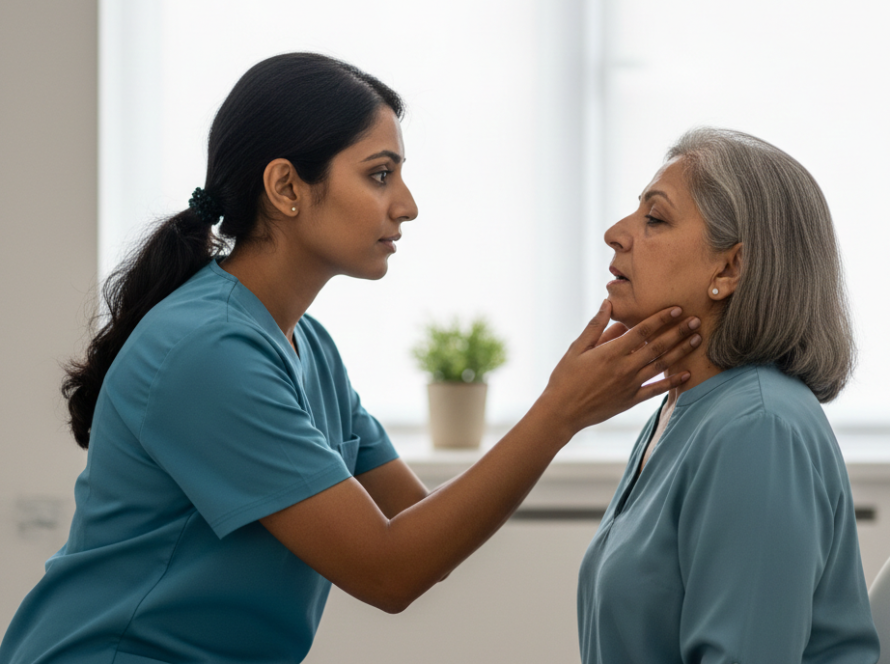


Expert swallowing therapists
Certified dysphagia specialists with advanced training in neurogenic swallowing disorders, post-stroke rehabilitation, and assessment techniques.
Advanced diagnostic equipment
State-of-the-art endoscopy system, videofluoroscopy capabilities, and specialized swallowing assessment tools for accurate dysphagia diagnosis.
Personalized treatment plans
Customized swallowing therapy programs based on comprehensive clinical and instrumental assessment, tailored to your specific dysphagia type and severity.
Evidence-based therapy
Research-backed swallowing exercises, compensatory strategies, diet modifications, and neuromuscular electrical stimulation for optimal dysphagia recovery.