
Why swallowing exercises matter in dysphagia
Dysphagia is the medical word for difficulty in swallowing food, liquids, or tablets. In older adults, dysphagia increases the risk of food or liquid entering the airway (aspiration), which can lead to chest infections, aspiration pneumonia, and poor nutrition if not managed properly.
Swallowing uses many small muscles in the mouth, tongue, throat, and neck working together in a very quick, coordinated way. When these muscles become weak, slow, or uncoordinated due to age, stroke, Parkinson’s, dementia, or other health conditions, swallowing exercises can help improve strength and timing, making eating and drinking safer and more comfortable.
A structured home programme, designed by a speech‑language therapist, can support the gains made in clinic and help maintain function over time. The key is to know which swallowing exercises are safe to do at home and which ones must only be done under direct supervision.
Looking for Dysphagia Treatment at Home?
Swallowing exercises are one part of dysphagia rehabilitation and should be selected according to an individual’s swallowing needs. If you or your loved one needs a more comprehensive approach, SwallowCare provides dysphagia treatment at home, including swallowing assessment, personalised therapy, food and liquid texture guidance, and caregiver support. Our home-based swallowing therapy can help people who find travelling to a clinic difficult.
When are home swallowing exercises safe?
Swallowing is a sensitive function, so exercises should never be started just by copying from the internet or from a generic “swallowing therapy exercises PDF” without professional guidance. What is safe for one person may be risky for another, depending on their medical condition, strength, posture, and type of dysphagia.
Home swallowing exercises are usually safe when:
- A speech‑language therapist (or swallowing specialist) has assessed your swallowing in person.
- You have been given a personalised home exercise plan with clear written or printed instructions.
- You and your caregiver both understand how to do each exercise, how many times, and how often.
- The therapist has explained warning signs that mean you should stop and contact them.
On the other hand, it is not safe to begin or change exercises at home when:
- There is sudden new coughing, choking, or a wet / gurgly voice with meals.
- There are frequent chest infections or unexplained fevers.
- There is sudden weight loss, dehydration, or very low appetite related to swallowing.
- The person with dysphagia is very drowsy, confused, or unable to follow instructions.
In these situations, contact a doctor or swallowing therapist in Gurugram or your nearest hospital in Delhi NCR before doing any exercises.
Types of swallowing exercises your therapist may teach
Important: The exercises below are shared to help families recognise common techniques. Only do exercises that your therapist has selected and demonstrated for you.
Your therapist may choose a mix of the following categories based on your assessment.
Posture and positioning
- Upright sitting: Sitting at 90 degrees with feet supported and head in a midline position can reduce aspiration risk during meals.
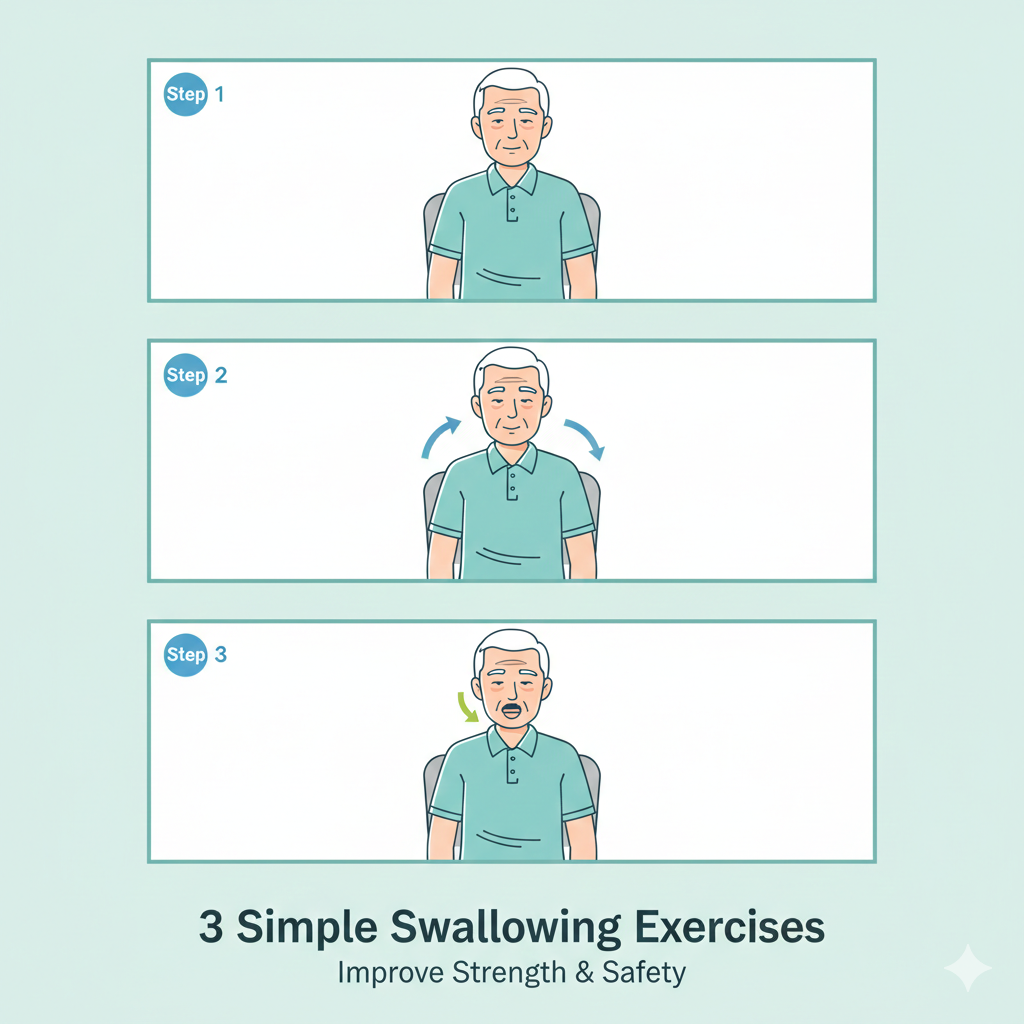
- Chin‑down posture (“chin tuck”): For some people, gently tucking the chin towards the chest while swallowing can help protect the airway and reduce residue in the throat. This is only recommended after a specialist has checked that it is suitable.
Mouth and tongue exercises
Mouth and tongue exercises focus on chewing, moving food around the mouth, and forming a good “ball” of food before swallowing.
Examples your therapist might prescribe include:
- Pressing the tongue firmly against the roof of the mouth and holding for a few seconds.
- Pushing the tongue against a spoon or tongue depressor held by the caregiver and holding, to build strength.
- Moving the tongue from one corner of the mouth to the other, slowly and with control.
These exercises can improve how well food is controlled in the mouth and may reduce the feeling of food “sticking” in the cheeks or under the tongue.
Throat and voice‑related exercises
Some exercises target the muscles that lift the voice box (larynx) and open the food pipe so that food and liquid pass safely into the oesophagus. Depending on the diagnosis, your therapist may teach
- Effortful swallow: Swallowing hard, as if trying to swallow a large tablet, to strengthen the muscles of the throat.
- “Hold and swallow” techniques (such as Mendelsohn‑type manoeuvres): Holding the Adam’s apple up for a moment during a swallow, under professional instruction, to improve opening of the upper food pipe.
Sometimes, voice‑based therapies that make you use a strong, loud voice can also improve swallowing muscle activity, especially in people with neurological conditions.
Breathing and cough‑strengthening exercises
A strong, effective cough is vital to clear any small amounts of food or liquid that may enter the airway. Some programmes include breathing exercises or devices that strengthen the muscles used for breathing out (expiratory muscle strength training), which have shown benefits in people with neurological swallowing problems.
These types of exercises should always be taught and monitored by a therapist, especially in older adults with heart or lung disease.
Simple swallowing habits you can start today
Along with specific swallowing exercises, small changes in daily habits can make eating and drinking safer for many people with dysphagia.
Here are general safety tips that are usually suitable for most older adults, but can still be discussed with your therapist:
- Sit upright for all meals and snacks. Avoid eating or drinking while lying down or slouched.
- Take small bites and sips. Rushing or taking large mouthfuls increases the chance of choking.
- Avoid talking while food is in the mouth. Focus on chewing and swallowing first.
- Eat in a quiet, calm environment. Distractions like TV or mobile phones can reduce attention to swallowing.
- Allow enough time for meals. Many older adults with dysphagia need longer to chew and swallow safely.
- Maintain good mouth care. Regular tooth‑brushing and oral hygiene help lower the risk of aspiration pneumonia by reducing harmful bacteria in the mouth.
Your therapist may also advise changes in food texture (for example, softer foods or thickened liquids) based on your swallowing pattern, especially if there is a high aspiration risk.
Step‑by‑step: practising your home programme safely
Use this simple framework to guide home practice for swallowing exercises once a therapist has given you a plan.
Step 1 – Keep your written plan nearby
Ask your therapist at Swallow Care or your local clinic in Gurugram to give a written or printed copy of your personal exercise plan. This should include the name of each exercise, pictures or diagrams if possible, and the number of repetitions and times per day.
Keep this plan near the dining table or the place where exercises are usually done, so you do not have to rely on memory.
Step 2 – Choose the right time and place
- Pick a quiet time when the person is not too tired, in pain, or rushing for somewhere else.
- Ensure they are sitting upright, with good lighting and minimal noise.
- If the caregiver is helping, sit at eye level and maintain a calm, reassuring tone.
Doing swallowing exercises when someone is very sleepy, breathless, or unwell can increase the risk of choking or exhaustion.
Step 3 – Follow the exact instructions
For each exercise in the plan:
- Read the name of the exercise aloud.
- Demonstrate once (caregiver) and then let the older adult try, gently correcting posture if needed.
- Count repetitions clearly (for example, “1…2…3… relax”).
- Allow short rest breaks between sets to avoid fatigue.
If the person feels dizzy, breathless, or starts coughing, stop the session and allow a longer rest. If these problems continue, contact your therapist before the next session.
Step 4 – Keep a simple diary
A small notebook or digital note can help track progress. Caregivers can write:
- Date and time of the exercise session.
- Which exercises were done and how many times.
- Any problems (e.g., “mild cough on second sip”, “felt tired quickly”).
This information is very helpful for the therapist to fine‑tune the home programme and to decide when to progress or reduce certain exercises.
Warning signs: when to stop and call for help
While most therapist‑guided swallowing exercises are safe, it is important to recognise warning signs that mean you should stop and seek advice:
- Frequent coughing or choking during or right after meals.
- A “wet” or gurgly voice after swallowing, especially with liquids.
- Food or tablets sticking in the throat or taking a very long time to go down.
- Repeated chest infections or pneumonia.
- Unexplained weight loss, dehydration, or very low appetite.
- Sudden change in alertness, confusion, or ability to sit upright safely.
If any of these appear, stop home exercises and contact your doctor or swallowing therapist in Gurugram or your nearest centre in Delhi NCR. In an emergency (for example, if the person cannot breathe, speak, or cough), follow basic first aid and seek urgent medical help.
How Swallow Care in Gurugram supports you
Swallow Care in Gurugram focuses on safe, evidence‑based dysphagia management for older adults and people with neurological conditions.
Our team can support you and your family with:
- Detailed swallowing assessments to understand the exact pattern and severity of dysphagia.
- Individualised swallowing therapy sessions in Gurugram, with clear explanation in simple language for both seniors and caregivers.
- A personalised home swallowing exercise programme, with written instructions that are easy to follow.
- Caregiver training, so family members feel confident to supervise exercises and mealtimes safely.
- Guidance on food textures, safe mealtime positions, and daily routines to reduce aspiration risk.
If you or your loved one is struggling with swallowing, coughing with meals, or taking too long to finish food, you can contact Swallow Care in Gurugram for an expert swallowing assessment and a customised home exercise plan. Our team serves families across Gurugram and Delhi NCR and is happy to guide you step‑by‑step.
Whether you search for “dysphagia treatment in Gurugram”, “swallowing therapy near me”, or “dysphagia therapy in Delhi NCR”, Swallow Care aims to be your trusted partner for safe swallowing and better quality of life for seniors.
Frequently asked questions about swallowing exercises at home
Can I download any swallowing exercises for dysphagia PDF and start on my own?
It is not safe to start new swallowing exercises without professional guidance, even if a PDF looks simple and clear. Swallowing problems are different for each person, and the wrong exercise or position can increase aspiration risk instead of reducing it. Always ask a speech‑language therapist or swallowing specialist to assess you and create a personalised home programme before you begin.
How many times a day should I do swallowing exercises?
The exact number of repetitions and sessions per day depends on your diagnosis, strength, stamina, and other medical conditions. Many programmes suggest practising once or twice a day with short, focused sets, but this must be confirmed with your therapist. Doing too much can cause fatigue, which may actually make swallowing less safe, especially in older adults.
Are there any simple swallowing tips that are usually safe for most seniors?
Yes. Sitting upright at 90 degrees, taking small bites and sips, avoiding talking with food in the mouth, and eating slowly in a quiet environment are generally safe tips that help many older adults. However, if there is a history of aspiration pneumonia, frequent chest infections, or significant weight loss, these tips should be combined with a personalised swallowing plan from a therapist.
When should we think about seeing a swallowing specialist in Gurugram?
You should consider seeing a swallowing specialist if meals are taking much longer than before, there is coughing or choking with food or drinks, a wet/gurgly voice after meals, or repeated chest infections. Families in Gurugram and Delhi NCR can look for services when they search “dysphagia treatment in Gurugram” or “swallowing therapy near me” so that problems are caught early and managed in a planned way.