
Expert Pre & Post-Surgery Swallowing Support for Safe Recovery
Worried about swallowing before surgery or struggling to eat and drink safely after surgery? Swallow Care provides specialist pre post surgery swallowing support in Gurugram, Gurgaon, and Delhi NCR so patients can prepare earlier, recover more safely, and regain confidence at meals.
Trusted swallowing care

Trusted swallowing care
Specialist dysphagia care.
Home visits available.
Serving Gurugram, Gurgaon, and Delhi NCR.
Evidence-based therapy and assessment.
Personalised treatment plans.
Clinician-led care.
How our care works
- Book appointment.
- Swallowing assessment.
- Personalised treatment plan.
- Therapy sessions.
- Progress review.
A clinical swallowing assessment helps identify coughing, choking, food sticking, pain, fatigue, aspiration risk, and whether a patient needs texture changes or rehab support. If needed, the plan may include exercises, posture advice, safer swallowing strategies, or referral for instrumental testing.
Why timing matters
Swallowing problems after surgery are common enough that early evaluation matters, especially when surgery involves the neck, throat, larynx, chest, or prolonged intubation. Early intervention can help reduce complications such as dehydration, poor nutrition, chest infection, and unsafe oral intake.
For many patients, the first few days and weeks after surgery are the most important window for recovery planning.
Common signs
You may need swallowing therapy if any of these are happening:
- Coughing while eating or drinking.
- Choking on water or thin liquids.
- Food or tablets feeling stuck.
- Wet, gurgly voice after swallowing.
- Pain while swallowing.
- Taking a long time to finish meals.
- Avoiding food after surgery.
- Repeated chest infections.
- Weight loss or poor intake.
- Difficulty managing saliva or pills.
These signs can point to dysphagia, which means difficulty swallowing. Some problems improve quickly, while others need structured rehabilitation.
Start with the right next step
If surgery is planned
Start with a pre-operative swallowing review. This helps identify baseline swallowing concerns, prepare diet advice, and set expectations for recovery.
If the person had throat, neck, or laryngeal surgery
Start with a swallowing assessment. These surgeries can affect anatomy, sensation, and airway protection.
If swallowing became difficult after intubation or chest surgery
Start with post-operative swallowing rehab. Dysphagia can persist after prolonged intubation or thoracotomy and may improve with targeted rehabilitation.
If food gets stuck or swallowing hurts
Start with a swallowing assessment, and if needed, medical referral for throat or esophageal review.
If the person cannot travel
Ask about home-based swallowing support or home dysphagia screening.
What swallowing therapy can help with
Swallowing therapy may help people who have difficulty with:
- chewing.
- starting a swallow.
- moving food safely from mouth to throat.
- clearing residue after a swallow.
- drinking safely.
- managing fatigue during meals.
- returning to a safer diet texture.
The therapy plan depends on the cause of the swallowing problem. That is why a proper assessment matters before starting exercises.
What happens during a swallowing assessment
A swallowing assessment usually begins with a clinical review of your symptoms, medical history, and meal-time concerns. The therapist may check mouth movement, chewing, voice quality, swallowing safety, and how you handle different food or liquid textures.
Based on the findings, you may receive:
- a safety plan for eating and drinking.
- swallowing therapy exercises if appropriate.
- diet texture guidance.
- caregiver training.
- referral for instrumental testing if needed.
- If you need a more detailed review, Swallow Care can guide you toward the right next step.
What makes Swallow Care different
- Individualised therapy.
- Evidence-based rehabilitation.
- Home visit availability.
- Caregiver education.
- Specialist swallowing expertise.
- Structured follow-up care.
Our approach is practical: we assess the swallowing problem first, then match the plan to the person’s needs instead of using a one-size-fits-all routine.
Where we help
We support patients across:
- Gurugram.
- Gurgaon.
- Delhi NCR.
- Nearby home-visit locations when available.
If you are searching for swallowing clinic near me, swallowing specialist near me, dysphagia therapy near me, or swallowing therapy after surgery, this page is designed to guide you to the right care pathway.

Pre & Post-Surgical Dysphagia Care | From Assessment to Complete Recovery
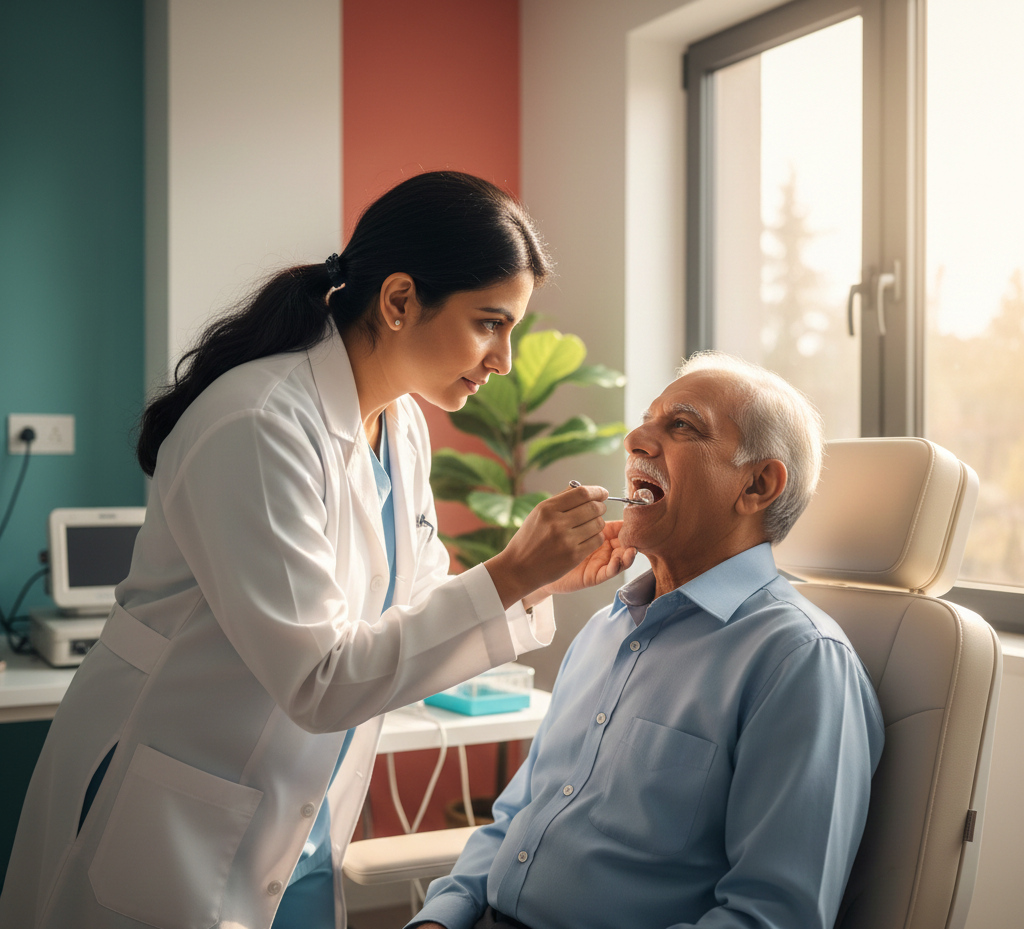
Post-surgery swallowing assessment by certified dysphagia specialist at Swallow Care Gurugram
Quick guide
| Problem | Recommended first step |
|---|---|
| Surgery planned | Pre-operative swallowing review |
| Coughing during meals after surgery | Swallowing assessment |
| Throat or neck surgery recovery | Clinical swallowing evaluation |
| Intubation-related swallowing issue | Post-operative swallowing rehab |
| Unable to travel | Home visit support |
This kind of clear decision table improves featured-snippet eligibility because it answers the user’s next-step question directly.
Common conditions we see
- Dysphagia after throat surgery.
- Swallowing difficulty after neck surgery.
- Post-intubation swallowing problems.
- Swallowing changes after chest or cardiac surgery.
- Cancer-related swallowing rehabilitation.
- Need for diet texture consultation.
If your concern is not listed here, that does not mean it is not treatable. It just means an assessment is the best way to understand the problem.
Understanding Post-Surgical Swallowing Difficulties
Surgical procedures can affect swallowing through
Anatomical Changes
Physiological Impact
Temporary vs Permanent Changes


Restoring health through massage
Sed ut perspiciatis unde omnis iste natus error sit voluptatem accusantium doloremque laudantium, totam rem aperiam. Sed ut perspiciatis unde omnis iste.
Sit voluptatem accusantium doloremque laudantium, totam rem aperiam. Sed ut perspiciatis unde omnis iste.
Years
Experts
Centers
Techniques
Our instagram
Dicta sunt explicabo. Nemo enim ipsam voluptatem quia voluptas sit aspernaturaut odit aut fugit.






Frequently asked questions
No. It also helps people after neck, chest, cardiac, cancer-related, and other surgeries that affect swallowing.
It can improve swallowing safety and function in many people, but the outcome depends on the cause, severity, and how early treatment begins.
It should not be painful. Some assessments or tests may feel uncomfortable, but therapy itself is usually planned to be safe and tolerable.
Yes. Older adults often need support after surgery, especially if intake drops, fatigue increases, or swallowing becomes less efficient.
Not always. Many people can book directly, although a referral may help if there are medical complications or warning signs.Accordion Content
The first visit usually includes symptom review, swallowing observation, and a plan for what to do next. You may also get home advice, safety changes, or a referral for further testing
Book your appointment
If swallowing is making recovery harder, the next step is not guesswork — it is a proper evaluation and a clear plan. Early support can make eating safer, reduce stress at meals, and help you move through recovery with more confidence.