Swallowing Therapy & Dysphagia Treatment in Delhi
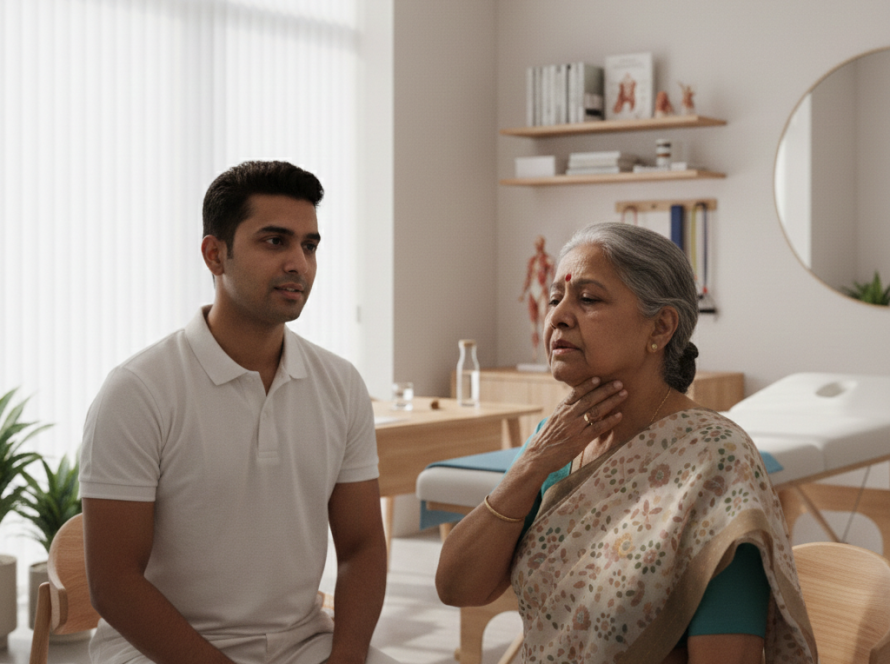
SwallowCare provides swallowing assessment, dysphagia screening and swallowing therapy for adults in Delhi. We also provide home-based dysphagia treatment for patients who find it difficult to travel to a clinic.
SwallowCare’s outpatient clinic , while our home-based swallowing service allows eligible patients in Delhi to receive swallowing assessment and therapy at home. This can be particularly helpful for people recovering after stroke, neurological illness, hospitalisation or reduced mobility.
If you are looking for a swallowing therapist in Delhi, dysphagia treatment in Delhi or swallowing therapy at home, our team can help you understand the appropriate assessment and treatment options.
Swallowing Difficulties We Help Manage
Swallowing difficulties, also known as dysphagia, can affect eating, drinking, nutrition, medication intake and everyday mealtimes. Early assessment can help identify the person’s swallowing difficulties and determine appropriate next steps.
SwallowCare provides assessment and therapy support for adults experiencing symptoms such as:
- Difficulty swallowing food
- Difficulty swallowing liquids
- Food feeling stuck in the throat or chest
- Coughing or choking during meals
- Repeated throat clearing while eating or drinking
- Wet or gurgly voice after swallowing
- Difficulty swallowing tablets
- Food remaining in the mouth
- Difficulty managing saliva
- Taking unusually long to finish meals
- Avoiding certain foods because they are difficult to swallow
A swallowing assessment can help determine whether these symptoms may be related to dysphagia and what type of support may be appropriate.
Who May Need Swallowing Therapy in Delhi?
Swallowing difficulties can have many causes. SwallowCare provides individualised assessment and therapy support for adults experiencing dysphagia associated with different conditions and stages of recovery.
Stroke Survivors
Swallowing difficulties are common after stroke and may affect eating, drinking and nutrition. Swallowing assessment and dysphagia therapy can be tailored to the person’s individual needs.
People With Parkinson's Disease
Parkinson’s disease can affect the muscles and coordination involved in swallowing. Assessment can help identify swallowing difficulties and guide an appropriate therapy plan.
Older Adults
Older adults may experience swallowing difficulties alongside frailty, reduced muscle strength or neurological conditions. A swallowing assessment can help identify appropriate support.
Neurological Conditions
Neurological conditions can affect the strength, coordination and timing needed for swallowing. Dysphagia therapy can be tailored according to the person’s condition and clinical needs.
Post-Hospitalisation or Recovery
Some people develop swallowing difficulties after surgery, prolonged hospitalisation or significant illness. Swallowing assessment can help determine appropriate rehabilitation and follow-up.
What Does Dysphagia Treatment Include?
Dysphagia treatment is not the same for everyone. SwallowCare uses assessment findings to develop an approach based on the person’s symptoms, swallowing function, medical history and rehabilitation needs.
Depending on the individual’s needs, therapy may include:
1. Swallowing Assessment
The therapist reviews symptoms, medical history, eating and drinking difficulties and relevant aspects of swallowing function.
2. Individualised Dysphagia Therapy
Therapy is selected according to the person’s swallowing difficulties and clinical needs rather than using a one-size-fits-all programme.
3. Swallowing Exercises
Where clinically appropriate, specific exercises may be prescribed to address aspects of swallowing function.
4. Mealtime & Swallowing Strategies
Practical strategies may be provided around positioning, pacing, swallowing techniques and mealtime routines.
5. Caregiver Guidance
Family members and caregivers can learn how to support therapy and follow recommended strategies during meals and daily routines.
6. Follow-Up
Progress can be reviewed during follow-up sessions, with the therapy approach adjusted when clinically appropriate.
Swallowing Assessment & Dysphagia Evaluation in Delhi
A clinical swallowing assessment helps understand the person’s swallowing difficulties and determine appropriate next steps. The assessment is tailored to the individual’s symptoms, medical history and current eating and drinking concerns.
The assessment may involve:
- Reviewing swallowing symptoms
- Understanding medical and treatment history
- Looking at oral movements and control
- Assessing relevant swallowing functions
- Observing selected food or liquid trials when clinically appropriate
- Discussing risks and appropriate next steps
The purpose is to understand the person’s swallowing difficulty rather than simply prescribing exercises.
Dysphagia Treatment at Home in Delhi
Travelling to a clinic can be difficult for some people, particularly after a stroke, during neurological rehabilitation, or when mobility and fatigue are significant concerns.
SwallowCare provides home-based swallowing assessment and therapy support in Delhi, where clinically appropriate.
Home-based support may be particularly useful for:
- Stroke survivors with mobility difficulties
- Older adults with frailty
- People with Parkinson’s diseasePeople recovering after hospitalisation
- Individuals who depend on caregivers for transportation
- People who find travelling difficult or exhausting
Home sessions may include assessment, therapy, caregiver education and practical mealtime guidance according to the individual’s needs.
SwallowCare can provide swallowing support through clinic-based and home-based services.
Travelling to a clinic can be difficult for some people, particularly after a stroke, during neurological rehabilitation, or when mobility and fatigue are significant concerns.
| Clinic-Based Care | Home-Based Care |
|---|---|
| Assessment at the SwallowCare clinic | Assessment in the person’s home |
| Suitable for people who can travel | Useful when travelling is difficult |
| Controlled clinical environment | Allows the therapist to observe the person’s usual environment |
| Therapy sessions at the clinic | Therapist-led support at home |
| Follow-up as required | Follow-up as required |
Home-based support may be particularly useful for:
- Stroke survivors with mobility difficulties
- Older adults with frailty
- People with Parkinson’s diseasePeople recovering after hospitalisation
- Individuals who depend on caregivers for transportation
- People who find travelling difficult or exhausting
The appropriate setting depends on the person’s condition, mobility, clinical needs and practical circumstances.
How SwallowCare's Dysphagia Care Works
Travelling to a clinic can be difficult for some people, particularly after a stroke, during neurological rehabilitation, or when mobility and fatigue are significant concerns.
Step 1: Contact SwallowCare
Tell us about the swallowing difficulty and the person's current condition.
Step 2: Assessment
A swallowing assessment helps understand the person's symptoms and swallowing function.
Step 3: Individualised Plan
The therapist discusses appropriate therapy and practical strategies based on the assessment.
Step 4: Therapy & Guidance
Sessions may include swallowing therapy, exercises where appropriate, mealtime strategies and caregiver education.
Step 5: Follow-Up
Progress is reviewed and the approach can be modified when required.
Why Choose SwallowCare?
SwallowCare focuses specifically on swallowing difficulties and dysphagia care, rather than treating swallowing as a secondary concern.
Swallowing-Focused Care
Our services include swallowing assessment, dysphagia screening and swallowing therapy.
Individualised Therapy
Treatment is based on the person's swallowing difficulties, medical condition and rehabilitation requirements.
Clinic & Home-Based Support
SwallowCare is based in Gurugram and provides clinic-based care along with home-based swallowing support across Delhi NCR.
Caregiver Education
Families and caregivers can receive practical guidance to support therapy and mealtime routines.
Delhi NCR Service Coverage
SwallowCare serves patients and families across Delhi and the wider Delhi NCR region through its clinic and home-based services.
Areas of Delhi We Serve
SwallowCare provides home-based swallowing assessment and therapy across areas of Delhi, subject to the patient’s address, clinical requirements and appointment availability.
South Delhi
Greater Kailash, Vasant Kunj, Saket, Hauz Khas, Defence Colony
Central & New Delhi
Connaught Place, Karol Bagh, Patel Nagar, Chanakyapuri
West & South-West Delhi
Dwarka, Janakpuri, Rajouri Garden, Uttam Nagar
North & East Delhi
Rohini, Pitampura, Mayur Vihar, Preet Vihar, Shahdara
Looking for home-based swallowing therapy outside Delhi? SwallowCare also serves patients across Delhi NCR, including Gurugram, Noida, Ghaziabad and Faridabad. Contact us to confirm home-visit availability.
Swallowing Therapy Across Delhi NCR
SwallowCare is based in Gurugram and provides swallowing and dysphagia services for families across Delhi NCR.
Explore care available in your area:
Gurugram
SwallowCare’s outpatient clinic is located in Gurugram, while home-based swallowing services allow eligible patients in Delhi to receive assessment and therapy at home. This can be particularly useful for people who find travelling difficult after stroke, neurological illness, hospitalisation or reduced mobility.
Noida
Home-based swallowing assessment and therapy support for eligible patients in Noida.
Faridabad
Home-based swallowing support may be available for patients in Faridabad.
Ghaziabad
Swallowing assessment and home-based therapy support may be available in Ghaziabad.
When Should You Seek a Swallowing Assessment?
Consider speaking with a qualified swallowing professional if you or your family member regularly experiences:
- Coughing or choking while eating
- Food getting stuck
- Difficulty swallowing liquids
- Difficulty swallowing tablets
- Repeated chest infections
- Unexplained weight loss
- Long or exhausting mealtimes
- Difficulty managing saliva
- A noticeable change in eating or drinking
If someone cannot breathe, speak or cough effectively because of choking, seek emergency medical help immediately.
Frequently Asked Questions
Dysphagia is the medical term for difficulty swallowing food, liquids or saliva. It can occur because of neurological, muscular, structural or other medical conditions.
SwallowCare provides swallowing assessment and therapy support for adults in Delhi. Home-based services may also be available for people who have difficulty travelling to a clinic.
Yes. SwallowCare provides home-based swallowing assessment and therapy support across Delhi NCR, subject to the patient’s address, clinical requirements and appointment scheduling.
Yes. SwallowCare provides swallowing assessment and therapy support for adults experiencing swallowing difficulties after stroke, when clinically appropriate.
Swallowing difficulties can occur with Parkinson’s disease. SwallowCare can assess swallowing function and provide an individualised therapy approach where appropriate.
An assessment is generally important for understanding the person’s swallowing difficulties and determining an appropriate therapy approach.
Yes. Home-based swallowing assessment and therapy may be available across Delhi NCR for people who have difficulty travelling to a clinic.
SwallowCare provides swallowing assessment in Gurugram and home-based support across Delhi NCR, depending on the patient’s location and clinical requirements.
Book Swallowing Therapy in Delhi
If you or a family member is experiencing difficulty swallowing, coughing during meals, choking, food getting stuck, or changes in eating and drinking, SwallowCare can help you understand the next appropriate step.
Clinic:
Nursing Home 2, Anant Raj Estate, Sector 63A, Gurugram, Haryana 122102
Services:
Swallowing Assessment · Dysphagia Screening · Dysphagia Therapy · Swallowing Exercises · Home-Based Swallowing Support · Caregiver Guidance