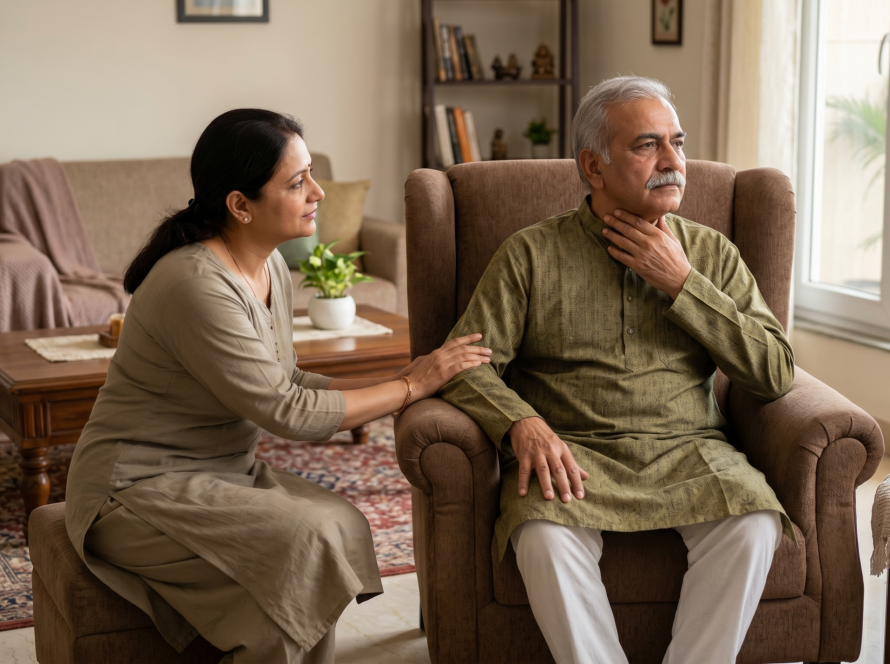

If your loved one has started coughing during meals, choking on water, or avoiding food after a stroke, it is understandable to feel worried. Dysphagia after stroke is common, and the safest next step is early swallowing assessment so that eating and drinking can be managed properly before complications develop.
If you are looking for swallowing therapy after stroke in Gurugram, this page explains what dysphagia is, what recovery may look like, what happens during assessment, and when to seek specialist help. Patients across Gurugram, Gurgaon, and Delhi NCR often need a clearer plan after discharge, especially when swallowing feels uncertain at home.
Table of Contents
Trusted stroke swallowing care
- Specialist dysphagia care
- Clinician-led swallowing assessment
- Evidence-based rehabilitation
- Home visits available in Gurugram when travel is difficult
- Serving Gurugram, Gurgaon, and Delhi NCR
- Personalised treatment planning after stroke
Quick Overview
Dysphagia after stroke means swallowing has become difficult, slow, or unsafe because the stroke affected the brain pathways, nerves, muscles, sensation, or timing needed for swallowing. It may lead to coughing during meals, choking on liquids, food staying in the mouth, a wet voice after swallowing, poor oral intake, or aspiration into the airway.
Some people improve within the early phase of recovery, while others need longer-term swallowing rehabilitation and texture changes. Because post-stroke dysphagia can raise the risk of dehydration, malnutrition, and aspiration pneumonia, early review is important.
If you are searching in Gurugram
If you are searching for dysphagia after stroke treatment in Gurugram, the most important first step is not guessing exercises at home. It is a swallowing assessment that identifies what is unsafe, what can continue, and what type of support is needed next.
Many families in Gurugram and Delhi NCR notice the problem only after returning home from hospital, when meals become stressful or water starts causing cough. That is exactly the point when specialist swallowing input can make recovery safer and more structured.
Why swallowing changes after stroke
Swallowing is not a simple throat action. It depends on a coordinated sequence involving the brain, tongue, throat muscles, airway protection, and breathing. A stroke can interrupt this coordination, reduce sensation, weaken movement, or delay the swallow reflex, which increases the chance of food or liquid entering the airway.
That is why someone may chew normally but still choke on water, or may manage one texture but not another. In some cases, swallowing can even be unsafe without much visible coughing, which is why clinical assessment matters more than guesswork.
Signs of dysphagia after stroke
Common signs include:
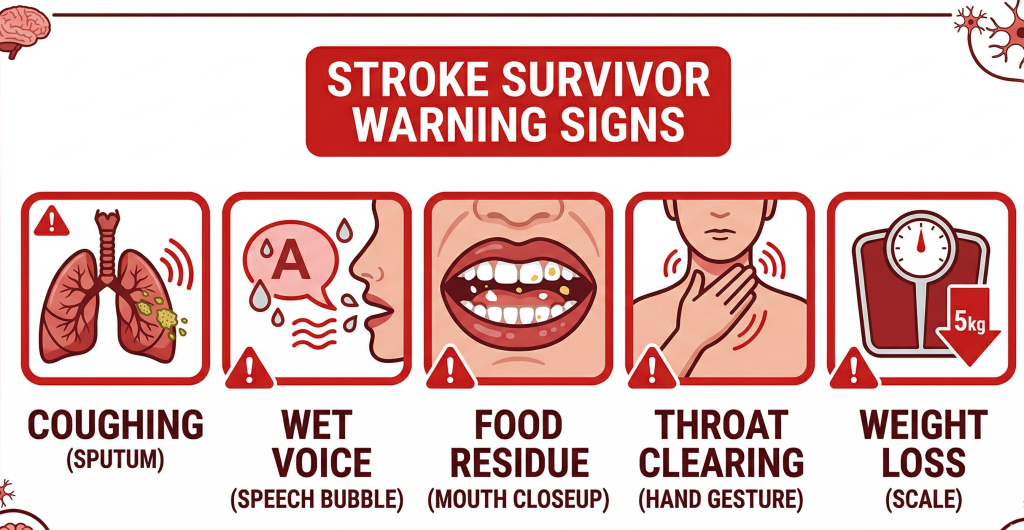
- Coughing during or after meals
- Choking on water or thin liquids
- Wet or gurgly voice after swallowing
- Food staying in the mouth or cheeks
- Repeated swallowing for one bite or sip
- Food feeling stuck
- Needing a very long time to finish meals
- Drooling or poor saliva control
- Weight loss or poor intake
- Repeated chest infections
If these symptoms are happening after stroke in a patient at home in Gurugram, they should not be treated as minor or temporary without review.
When to seek help urgently
Please arrange prompt swallowing assessment if the person:
- coughs with most drinks
- has a wet voice after meals
- refuses food because swallowing feels unsafe
- loses weight or seems dehydrated
- develops repeated chest infections
- struggles to swallow tablets or saliva
If breathing is affected, choking does not clear, or the person cannot manage secretions, seek urgent medical care immediately.
How common is dysphagia after stroke?
Difficulty swallowing is one of the most common problems after stroke. The American Stroke Association notes that dysphagia is common in stroke survivors, especially in the early period after stroke. Review articles also describe dysphagia as affecting a large proportion of acute stroke patients, although many improve over the first days and weeks while others continue to need rehabilitation.
That means swallowing problems should be expected, screened early, and reviewed properly rather than left to chance.
How our care works
- Book an appointment.
- Clinical swallowing assessment.
- Safety plan for food and fluids.
- Personalised swallowing therapy.
- Progress review and next-step planning.
This step-by-step approach helps families understand what to do next instead of trying random diet changes or unsupervised exercises. For patients in Gurugram who cannot travel comfortably, home support may be the most practical first step.
What happens during a swallowing assessment
A swallowing assessment usually begins with questions about the stroke, current symptoms, chest health, eating patterns, fatigue, voice changes, and which foods or drinks are causing difficulty. The clinician may assess oral control, tongue and lip movement, posture, cough strength, voice quality, and swallowing safety using carefully selected textures when appropriate
A bedside swallow exam helps identify aspiration risk and whether the current food and fluid plan appears safe enough to continue, modify, or stop pending further testing. If needed, instrumental assessment such as FEES or VFSS may be recommended for a more detailed picture.
Recovery timeline after stroke dysphagia
| Time | What to expect | Main focus |
|---|---|---|
| First week | Early screening, swallowing safety decisions, oral intake review collections. | Assessment and safety planning |
| Weeks 2–4 | Improvement may begin in some patients, though many still need modified intake or guided therapy. | Early therapy and diet modification |
| 1–3 months | Functional gains are often clearer, with reassessment guiding progress. | Structured rehabilitation and safer oral intake |
| Beyond 3 months | Some people continue to recover, while others need long-term management and compensatory strategies. | Ongoing rehabilitation and maintenance |
There is no single recovery timeline for everyone. Some patients improve early, while others need a much longer swallowing recovery pathway after stroke.
Can dysphagia after stroke improve?
Yes, many people improve, especially when swallowing problems are recognised early and managed properly. Recovery depends on the type of stroke, its severity, other medical conditions, chest health, nutrition, fatigue, cognition, and the exact pattern of swallowing impairment.
The important point is that improvement is possible, but it should be guided by reassessment rather than assumed.
Is dysphagia after stroke permanent?
Not always. Some people recover well, while others continue to have long-term swallowing difficulty. Even when swallowing does not return completely to normal, treatment may still improve safety, comfort, confidence, and nutritional intake.
This is one reason your stroke page should also internally link later to a dedicated page answering “Is Dysphagia Permanent After Stroke?” because that query already has demand value.
How dysphagia after stroke is treated
Treatment depends on the individual swallowing problem, but may include:
- Swallowing exercises
- Postural changes and compensatory swallowing strategies
- Texture-modified diet and fluid changes
- Guided pacing and safer mealtime methods
- Oral care and aspiration risk reduction
- Caregiver instruction and home practice
- Regular reassessment as recovery changes
The goal is not simply to get through meals. It is to support safer swallowing, better nutrition, and a clearer recovery path.
Safe eating tips after stroke
These general safety principles are often recommended while waiting for or following specialist guidance:
- Sit fully upright for meals and remain upright afterwards
- Take small bites and small sips
- Reduce distractions during eating
- Slow the pace of meals
- Check that each mouthful is cleared before taking the next
- Do not change textures or thicken fluids without clinical advice
- Ask a pharmacist before crushing tablets
These are general precautions, not a substitute for personalised assessment.
Home support in Gurugram
Some stroke survivors are not well enough to travel comfortably for swallowing review. In those cases, home-based swallowing support can be especially valuable because assessment happens in the real meal-time setting, with the patient, caregiver, food textures, and practical risks all visible at once.
If you are looking for home visits for swallowing problems after stroke in Gurugram, this should be mentioned clearly on the page because it matches how families actually search when the patient is weak, recently discharged, or dependent for care.

Problems caregivers notice first
Family members often notice the first important changes:
- “He coughs every time he drinks water.”
- “Meals take forever now.”
- “Her voice sounds wet after meals.”
- “Food stays in the mouth.”
- “He is afraid to eat.”
- “She keeps getting chest infections.”
These observations are clinically useful and should be included during the assessment because they often point to aspiration risk or ineffective swallowing
Problem to next step
| Problem | Recommended first step |
|---|---|
| Coughing after water | Swallowing assessment. |
| Wet voice after meals | Swallowing safety review. |
| Food staying in the mouth | Oral motor and bedside swallowing review. |
| Repeated chest infection | Urgent dysphagia evaluation. |
| Eating less after stroke | Swallowing and nutrition review. |
| Unable to travel | Home visit swallowing support in Gurugram. |
This format is useful for featured snippets because it gives direct, practical next-step answers.
Why early assessment matters
Clinical guidelines for stroke care recommend early identification of dysphagia because swallowing problems are linked to aspiration, pneumonia, malnutrition, and poorer recovery when missed or delayed. Early assessment helps decide whether oral intake is safe, whether changes are needed, and what rehabilitation pathway should begin next.
For families in Gurugram, early assessment also reduces confusion after discharge by replacing trial-and-error eating with a clear plan.
Early intervention dramatically improves stroke swallowing recovery outcomes. Book stroke dysphagia assessment today
Contact Swallow Care Gurugram
Concerned about swallowing after a stroke? Early assessment can reduce complications and help build a safer recovery plan. If you are looking for help in Gurugram, Gurgaon, or Delhi NCR, book an assessment or ask about a home visit so the next step is based on clinical guidance instead of guesswork.
Areas We Serve Across NCR
Swallow Care provides in-clinic and home-based dysphagia assessments across Gurugram (Golf Course Road, DLF Phases 1-5, Sohna Road, Sector 14, MG Road), as well as Delhi, Noida, Faridabad, and Ghaziabad on request. If you are searching for a swallowing specialist near you in Delhi NCR, contact us to check availability in your area.
Frequently Asked Questions
Is difficulty swallowing normal after stroke?
It is common, but it should not be ignored. Dysphagia is a recognised complication after stroke and needs proper assessment because it can lead to aspiration and chest infection if unmanaged.
How soon should swallowing be assessed after stroke?
Stroke guidelines support early dysphagia identification, particularly before unrestricted oral intake begins.
Can dysphagia after stroke improve without treatment?
Some spontaneous improvement may happen, especially early on, but that does not mean assessment is unnecessary. Even short-term dysphagia can still be unsafe.
Does coughing always mean aspiration?
Not always, but it is a warning sign that should be checked. Coughing during or after swallowing may suggest airway compromise.
Can swallowing therapy help months after stroke?
Yes. Recovery and functional improvement may continue beyond the early stage, especially when therapy is based on the person’s actual swallowing problem.
Will everyone need thickened fluids?
No. Texture or fluid changes depend on the assessment findings and should not be prescribed casually.
Can dysphagia after stroke be permanent?
Yes, for some patients it can persist, but not for everyone. Even in long-term cases, treatment may still improve safety and quality of life.
Is home support available for stroke swallowing problems?
It can be appropriate when travel is difficult, especially after recent stroke, weakness, or caregiver dependence.